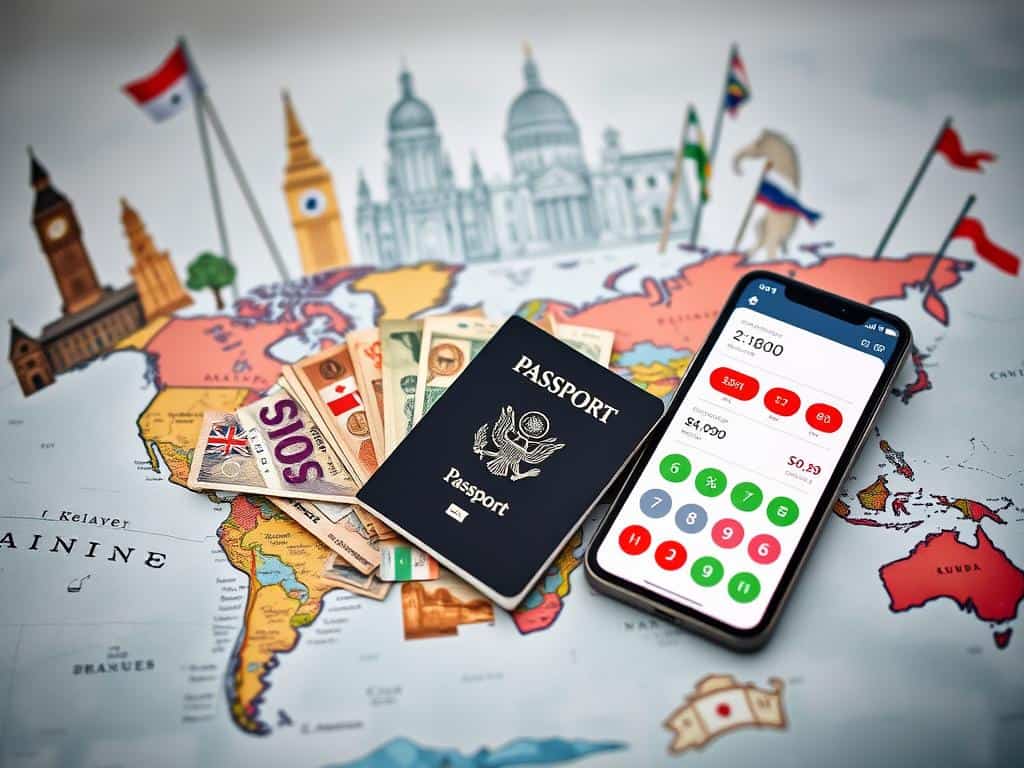
As I got ready for another exciting trip, I was in Barcelona’s lively market, exchanging euros. But then, I felt a shock when I saw I got a bad rate. My travel money was already tight.
This made me realize how key it is to get the best exchange rates. A little better rate could have meant more tapas for me. Small changes in rates can make a big difference in your travel costs.
In this article, I’ll share tips on currency exchange I’ve learned over time. You’ll learn about the factors that affect exchange rates and where to exchange money wisely. These travel money tips and exchange hacks will help you manage your finances better abroad. With some planning, you can enjoy your trip more without worrying about spending too much.
Key Takeaways
- Exchange rates can change quickly because of global factors.
- Comparing fees from different places can save you a lot.
- Using a prepaid currency card can be a smart move.
- Watch out for Western Union for sending money before you go.
- Think about using credit cards with no foreign transaction fees to save money.
Understanding Exchange Rates
Exchange rates are key in international finance. They help people and businesses switch one currency to another. For example, the U.S. dollar to euro exchange rate was 1.07 in June 2024. Knowing these rates is important for travel or global trade.
What are Exchange Rates?
Exchange rates show how much one currency is worth in another. Changes in these rates can affect the cost of goods and services. This is why it’s important for travelers and businesses to understand exchange rates.
The Factors Influencing Exchange Rates
Many things affect exchange rates, like interest rates and economic activity. Countries with high interest rates often get more foreign money, making their currency stronger. Political stability and economic health also play a role. Knowing these factors helps in making smart financial choices.
How to Monitor Exchange Rates Effectively
Keeping an eye on exchange rates is key for getting the best value abroad. Online tools and resources give up-to-date rates. Banks and credit unions often have better rates than currency exchange kiosks. Staying informed helps travelers get the most from their money.
Currency Exchange Tips
Traveling can be smoother if you know where to exchange currency. Learning the best ways to exchange money abroad helps you save money. It’s key to know about the fees to stay within your budget.
Where to Exchange Currency Before Traveling
Start by exchanging currency at banks or credit unions before you leave. They usually offer better rates and lower fees than airport kiosks. Exchanging a small amount early helps you cover immediate costs without bad rates.
Best Practices for Currency Exchange While Abroad
Using ATMs affiliated with your bank can get you better rates, 2% to 5% more than airport desks. These ATMs are everywhere, with networks like PLUS and Cirrus covering over a million ATMs globally. Avoid exchanging in tourist spots for better rates. Instead, go to larger, reputable shops for safer, better deals.
Understanding Fees and Charges
Knowing about fees is vital for managing your money abroad. Fees and charges can add up quickly. Always check for hidden fees and ensure rates don’t include surprise commissions. Some kiosks have different rates for buying and selling, making things tricky. Using a local ATM in your bank’s network can save you money and keep your withdrawals safe.
Alternative Currency Options
Traveling to another country means you need to think about your money. Looking into different ways to handle money can help a lot. Using credit cards without foreign transaction fees is a smart move. They often give better exchange rates than other ways to get money.
Using Credit and Debit Cards Abroad
Choosing the right credit card is key when traveling. Look for ones with no foreign transaction fees. Banks like Chase and Bank of America let you withdraw cash without high charges. It’s safer and easier than carrying lots of cash.
Using cards also makes it clear how much you’re paying in exchange rates. This is better than exchanging money at hotels or kiosks.
Benefits of Using ATMs to Withdraw Local Currency
Getting local currency from ATMs is often the cheapest way. ATMs from your bank usually have lower fees, from 1% to 3%. Make sure to check with your bank before you go to see if they have international ATM partnerships.
This way, you can get cash easily without having too much money on you.
Exploring Online Currency Exchange Services
Online currency exchange services are getting more popular. They can offer good rates, but prices can change a lot. For example, sites like Currency Exchange International might charge extra for delivery and have less favorable rates.
It’s important to compare different services before exchanging money online. This way, you can find the best deal for your trip.
Conclusion
In this article, I’ve shared tips on currency exchange that can help a lot when traveling. By doing research ahead of time, I can avoid high fees at airports. These fees can be up to 15%.
Knowing where to exchange currency is key. I can use big banks or online services to save money. This way, I can keep more of my funds and avoid extra costs.
When planning my trips, I should watch out for foreign transaction fees on credit cards. About 30% of cards charge fees between 1-3%. Choosing a card without these fees can save me around $200 over a week.
These tips remind me to stay informed about currency exchange. Knowing my options helps me stick to my budget. This way, I can enjoy my travels with confidence.
My aim is to be careful with currency exchanges. Almost 40% of travelers overspend because they don’t know enough. I can pre-purchase local currency, use travel cards smartly, and avoid risky exchanges.
By using these tips, I’m ready to handle currency exchange challenges. This ensures I get the most out of my travel experiences.
