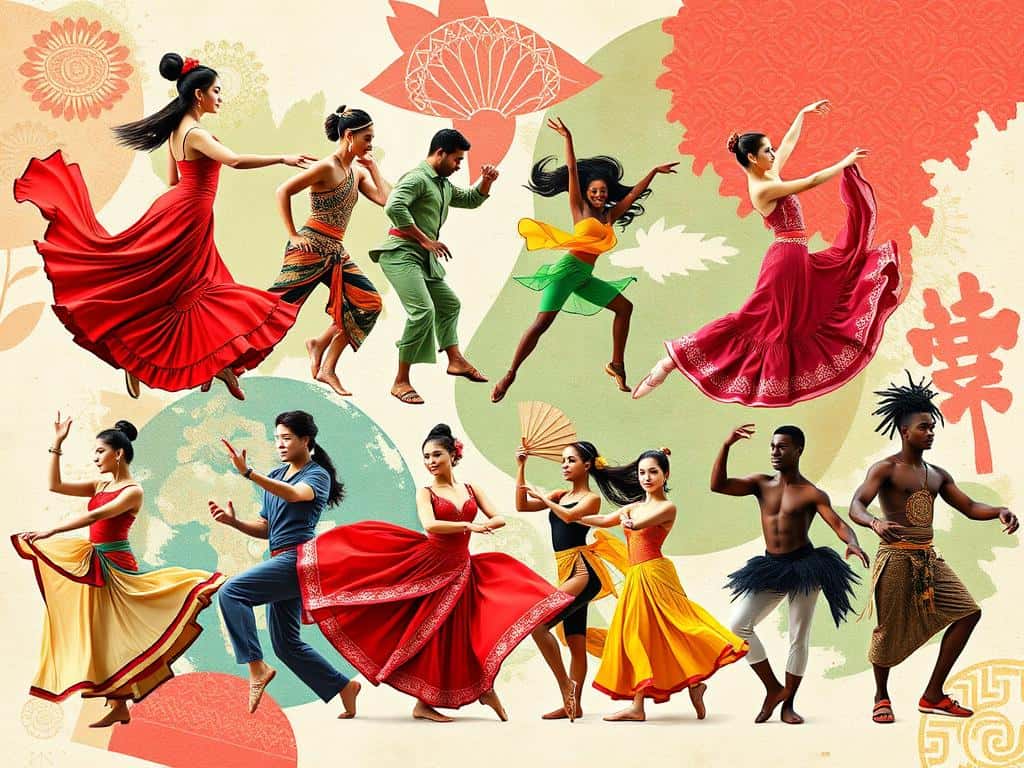
In Rio de Janeiro during Carnival, I felt the samba’s rhythm like a warm hug. The dancers, in their bright costumes, moved with grace. Their steps told stories as old as time.
Surrounded by the crowd’s energy, I saw dance as a bridge across borders. Each dance, like flamenco or bhangra, shows the joy of our shared lives. Dance is more than art; it’s a language that touches our hearts worldwide.
Key Takeaways
- Dance serves as a universal language that connects diverse cultures.
- Traditional dances reflect the unique cultural heritages of their regions.
- Each dance style tells a story, enriching our understanding of human experience.
- Samba, flamenco, bhangra, and azonto are global dance styles celebrating distinct backgrounds.
- The evolution of dance shows the influence of historical events and contemporary society.
- Performing arts play a vital role in preserving and sharing cultural identities.
The Cultural Significance of Dance
Dance is a powerful way to express culture, emotions, and stories worldwide. It connects people across the globe, acting as a universal language. Through dance, people from different backgrounds share feelings that words can’t always express.
Dance celebrates cultural rhythms and brings communities together. It’s a powerful way to celebrate and connect with others.
Dance as a Universal Language
Watching different dance styles from around the world is truly inspiring. It shows how dance can bridge gaps between people. At cultural dance festivals, people from all walks of life come together, creating a sense of unity.
These festivals are big draws for tourists, showing the value of dance in bringing people together. They highlight the importance of performing arts in fostering unity and understanding.
Expressions of Identity and Heritage
Dance is key to understanding identity and heritage. Each traditional dance tells a community’s story, values, and history. More people are taking traditional dance classes, showing a desire to keep these traditions alive.
As dance evolves, it stays true to its roots. This ensures that future generations can appreciate and carry on these rich traditions.
Global Dance Styles
Dance styles from around the world are vibrant cultural expressions. They show where they come from and are loved everywhere. Each dance has its own special moves and tells the story of its creators. Let’s explore some of these dances that make up the rich world of performing arts.
Samba: A Brazilian Icon Rooted in Tradition
Samba is a symbol of Brazilian dance, blending African influences. It’s known for its lively beats and colorful costumes, seen at the Rio Carnival. Samba comes in many styles, from solo to partner dances, showing Brazil’s rich culture and love for rhythm.
Flamenco: Passion and Storytelling through Movement
Flamenco is a 500-year-old Spanish dance tradition. It started in Andalusia and is known for its complex footwork and expressive hands. Flamenco tells stories through dance, touching hearts in Spain and around the world, like in Japan and the USA.
Azonto: Communicating Life through Ghanaian Dance
Azonto is a modern Ghanaian dance that’s become popular online. It uses fun, expressive moves to show life’s moments. Starting in Accra, Azonto mixes traditional dances with today’s culture, showing modern Ghana’s spirit.
Bhangra: The Energetic Celebration of Punjabi Culture
Bhangra celebrates Punjabi culture, mainly during Baisakhi. It’s known for its lively beats and engaging dance. Bhangra has spread globally, bringing Punjabi joy and unity to many cultures. Its bright clothes and happy steps show the joy of coming together.
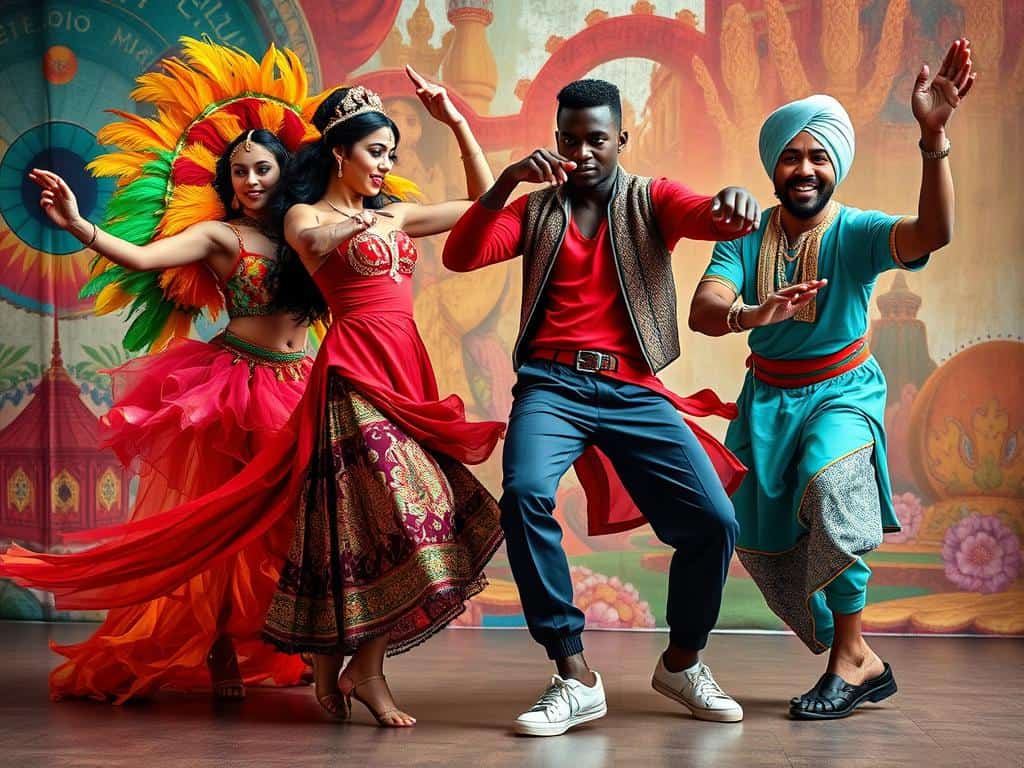
Exploring the Evolution of Traditional Dances
Traditional dances have changed a lot over time. This change came from events like colonization, migration, and globalization. These events let communities mix and share their dance styles.
These dance styles show how cultures adapt and keep their traditions alive. They do this through lively rhythms and movements.
The Influence of Historical Events on Dance Styles
Dance has been around for thousands of years. It was key in ancient rituals and celebrations. This shows how important dance is to cultures.
The Renaissance changed dance a lot. It moved from sacred to secular dances. Ballets like “The Nutcracker” and “Swan Lake” showed society’s growth during the 15th and 16th centuries.
Dance as a Reflection of Contemporary Society
Today, dance shows what society values. It reflects trends and changes in communities. Modern dance lets people share their views through movement.
Traditional dances now mix with modern styles. This makes them appealing to younger people. It’s a way for old and new dance to talk to each other.
Blending Cultures: The Transformation of Dance
Culture blending creates new dance styles. These styles mix old traditions with new ones. They attract people all over the world.
This mixing shows dance’s role in society. It’s a living art that shows how society changes and connects with its past.
Conclusion
Dance is more than just entertainment; it’s a deep way to express culture and identity. Styles like samba from Brazil and bhangra from India tell stories and connect people with their heritage. They also inspire new generations to respect their roots.
Dance has changed over the years, showing how society and history shape our moves. From the 1950s rock ‘n’ roll to today’s urban dance, each era adds to our understanding of celebrating culture through dance. This journey shows our shared human experiences and the value of cultural exchange.
Global dance styles weave a vibrant tapestry of human culture. As we explore and mix different styles, dance tells new stories. It shows the power of movement in building communities and connecting us worldwide.
