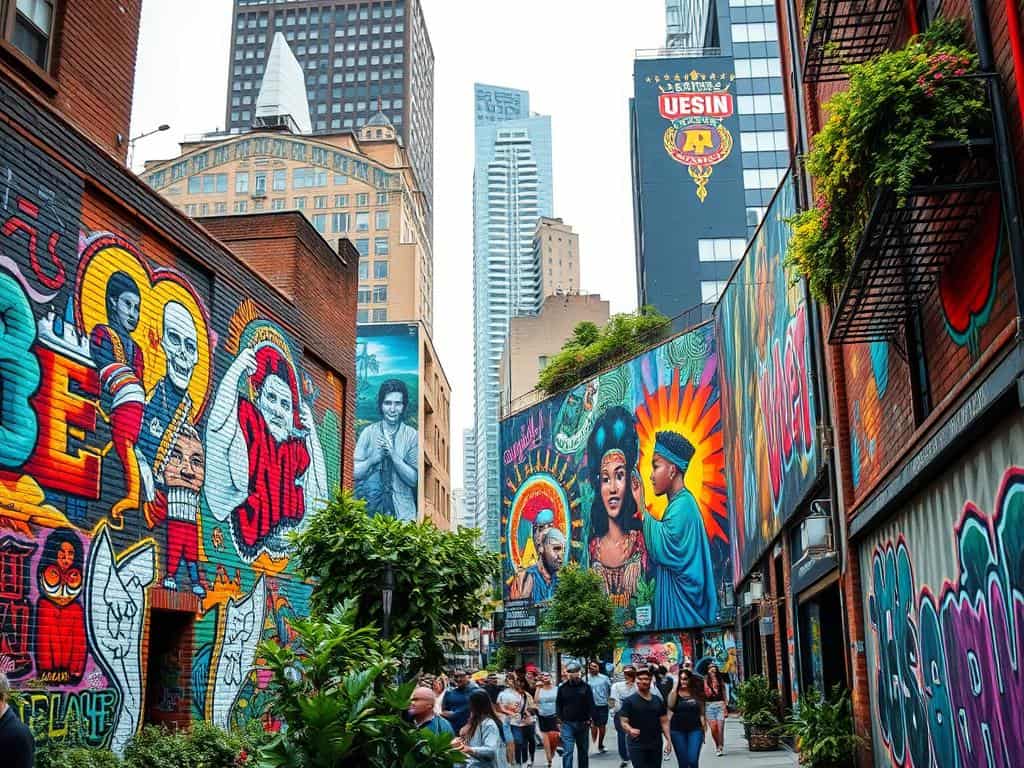
As I walked through Brooklyn’s lively streets, a splash of color caught my eye. A huge mural of a young girl with a crown, made from spray paint, stood on a building. It was more than just art; it was a conversation with the community. Street art mirrors our culture and tackles big issues, changing cities worldwide.
Starting as graffiti in the 1960s and 1970s, it’s now a respected art form. Artists worldwide are celebrated for their creativity and messages. Street art festivals in Berlin and New York show its growing importance.
Artists like Banksy, with his bold, political works, show street art’s power. It’s not just for looks; it’s a way for artists to share their views and change their surroundings. This art connects with people on a deep level.
Street art’s popularity comes with its own set of challenges. Artists face laws and the risk of their work being removed quickly. Yet, street art keeps growing in value and influence, showing a shift in how we see art in public spaces.
Key Takeaways
- Street art has gained popularity through festivals and international recognition.
- Many artists now pursue street art as a viable career, shifting its perception.
- Street art serves as a vital platform for social and political commentary.
- Despite challenges, street art continually influences urban environments.
- Street art’s evolution showcases its move from graffiti to a legitimate art form.
- Notable artists like Banksy and Shepard Fairey highlight its political significance.
The Evolution of Street Art from Graffiti to Public Expression
Street art’s journey from graffiti to a celebrated art form is fascinating. It has grown from a form of self-expression to a respected medium. Today, it enriches urban culture and brings communities together.
Historical Context of Graffiti
Graffiti started in the late 1960s and early 1970s in cities like New York and Philadelphia. At first, it was seen as vandalism. But it gave a voice to those who felt unheard, expressing political and social views.
It became a way for artists to mark their territory in neighborhoods. Graffiti was a canvas for empowerment and resistance, becoming a key part of urban culture.
Transformation into Street Art
The view of graffiti changed over time. Artists began using new techniques like stenciling and wheat-pasting. This allowed for bigger, more detailed works.
Artists like Jean-Michel Basquiat and Keith Haring helped street art gain respect. Their work was shown in galleries worldwide. Murals and large installations turned empty spaces into vibrant art, changing cityscapes.
The Role of Community in Street Art
Community support is essential for street art. Locals help artists by funding and participating in projects. Events like the “Living Walls” festival in Atlanta showcase street art’s impact.
Cities like Berlin, Melbourne, and New York see street art as a cultural and economic treasure. This collaboration beautifies neighborhoods and strengthens community bonds. It shows how street art connects people and places.
Street Art and Graffiti: Political and Social Commentary
Street art has become a strong way to share political views and social thoughts. It shows how art can be a powerful tool for change. Artists use their skills to grab people’s attention, talking about big issues like climate change and social inequality.
This art movement is important because it brings attention to big problems. It helps people see and understand issues that are often ignored.
Street Art as Activism
Street art reflects the struggles of society, giving a voice to those who are often overlooked. It stands strong in tough times, calling for change. Artists tackle big issues like refugee crises and environmental damage, pushing people to take action.
The art form started with graffiti in the 1960s. By the 1990s, it grew, using old techniques to tell new stories.
Notable Artists and Their Messages
Artists like Banksy and Shepard Fairey mix art and activism in their work. Banksy uses humor to make sharp points about society, making people think. Shepard Fairey’s “Hope” poster showed the power of art in bringing people together for change.
These artists show how street art can make a difference. They talk about big issues that affect many people.
Conclusion
Street art has come a long way from its graffiti roots. It’s now a respected form of public expression. I’ve seen how it has changed urban landscapes and community identities.
Artists are now using digital platforms to share their work. This has made street art more accessible and appreciated by more people.
Street art has become very popular, thanks to social media. It lets artists show their work to people all over the world. The future looks bright, with artists using new mediums like viral art and technology.
This shift into digital realms makes street art more interactive. It becomes a canvas for deep conversations about society and politics.
Street art’s future is exciting. It will keep sparking discussions about community, identity, and art. I think it will inspire new artists and engage people globally in important conversations.
