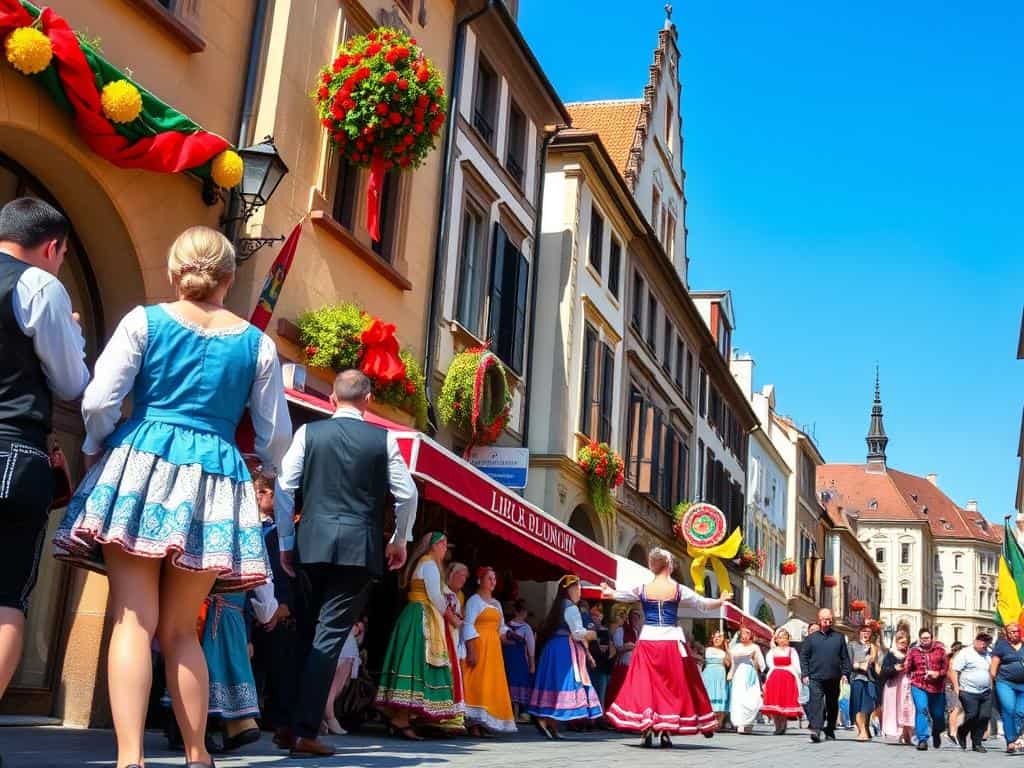
Did you know the Carnival of Venice has been celebrated for over 800 years? It started in the twelfth century. This shows just one of the many vibrant heritage events in Europe. Cultural festivals in Europe celebrate rich traditions and let you connect with local customs and communities.
As I explore this article, I’ll highlight five festivals that show Europe’s unique spirit and variety. Each festival captures the history and creativity of its culture. It offers an immersive experience you can’t find anywhere else. Whether you’re tossing tomatoes in Spain or dancing in Dublin, these festivals are key for experiencing Europe’s joy and diversity.
Key Takeaways
- The Carnival of Venice is one of the oldest continuously celebrated festivals in Europe.
- St. Patrick’s Day in Dublin attracts around 500,000 parade viewers.
- King’s Day in Amsterdam has been celebrated annually for the Dutch monarchy.
- La Tomatina in Buñol is a tomato-throwing event with over 20,000 participants each year.
- The Festival of Lights in Berlin illuminates the city for a week every October.
Cultural Festivals in Europe: An Overview
I find cultural festivals in Europe to be rich representations of the diverse cultural traditions found throughout the continent. Each event offers participants a chance to dive into the local culture. They engage with artistic expressions that resonate with both locals and visitors.
Festivals foster community spirit, spark interest in European culture, and often become a source of pride for those who celebrate them.
The Importance of Cultural Festivals
Cultural festivals play a vital role in maintaining the vibrant tapestry of European life. They not only showcase traditional music and dance but also serve as platforms for local food producers. In cities like Dublin and Venice, these festivities draw millions each year.
They promote a sense of belonging and encourage cross-cultural exchanges. Such interactions can enhance understanding and appreciation of diverse perspectives. This is invaluable in our increasingly globalized world.
Key Elements of European Festivals
Every cultural festival features unique elements that reflect its specific heritage. Traditional music often forms the heartbeat of these events, setting the tone for celebration and unity. Local food stands proudly alongside, highlighting regional flavors and culinary arts.
For instance, the Lemon Festival in Monterosso al Mare offers delightful lemon-infused delicacies. The incorporation of visual arts can transform public spaces into open galleries. This enriches the experience and allows visitors to engage with European culture in a dynamic way.
This blend of experiences allows each festival to tell its own story. It invites participants to immerse themselves into the culture and traditions that shaped it.
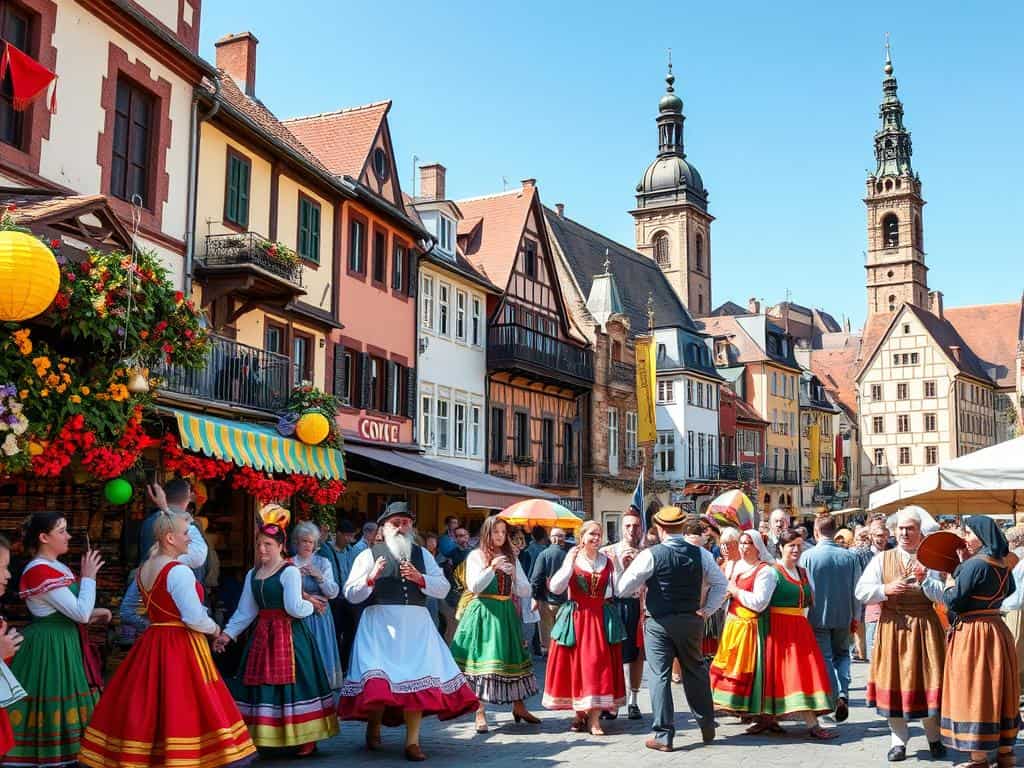
Five Must-Visit Festivals that Highlight Europe’s Diversity
Exploring Europe reveals a world of cultural festivals. These events showcase the continent’s rich traditions and celebrations. Here are five festivals every traveler should see.
Carnival of Venice
The Carnival of Venice is known for its stunning masks and costumes. It lasts ten days in February and March. The festival has a history dating back to the 11th century.
It features parades and masquerade balls. These events create a magical atmosphere in Venice. People enjoy theatrical performances that highlight the city’s creativity.
St. Patrick’s Day in Dublin
Dublin turns into a vibrant Irish culture celebration on St. Patrick’s Day. The festival runs from March 17th to 20th. It includes parades, concerts, and street theater.
People join in Irish dance, like the St. Patrick’s Festival Ceili. This lets them experience Ireland’s joyous spirit. It’s a unique way to see Ireland’s heart and soul.
King’s Day in Amsterdam
King’s Day in Amsterdam honors the Dutch monarchy on April 27th. The city becomes a sea of orange. People enjoy street parties, music, and canal festivities.
Flea markets are everywhere, where people sell goods. This celebration shows Dutch pride and community spirit. It’s a fun and engaging way to celebrate.
La Tomatina in Buñol, Spain
La Tomatina in Buñol is famous for its tomato-throwing battle. It happens on the last Wednesday of August. Thousands gather for a food fight, creating a joyful and messy scene.
The festival’s origins are rooted in humor and friendship. It’s a great place for spontaneous fun and creativity.
Festival of Lights in Berlin
The Festival of Lights in Berlin lights up the city in October. It features light installations by artists worldwide. This transforms iconic landmarks into stunning works of art.
Visitors see a mix of culture, technology, and creativity. It’s a chance to appreciate artistic innovation in the city.
Conclusion
Europe’s cultural events show a rich mix of diversity. Each festival is a chance for communities to share their heritage. From Venice’s Carnival masks to Dublin’s St. Patrick’s Day, these events celebrate what makes us unique.
Going to these festivals lets me dive into different cultures. I get to try local foods, listen to traditional music, and see the arts. For example, Denmark’s Vinterjazz or Austria’s Donauinselfest teach me about the areas’ stories. Each festival deepens my respect for European customs.
I think these festivals are key to understanding Europe’s diversity. I urge those who love exploring cultures to join in. They show how traditions and migration shape our world. By embracing these festivals, we celebrate the rich tapestry of European life.
