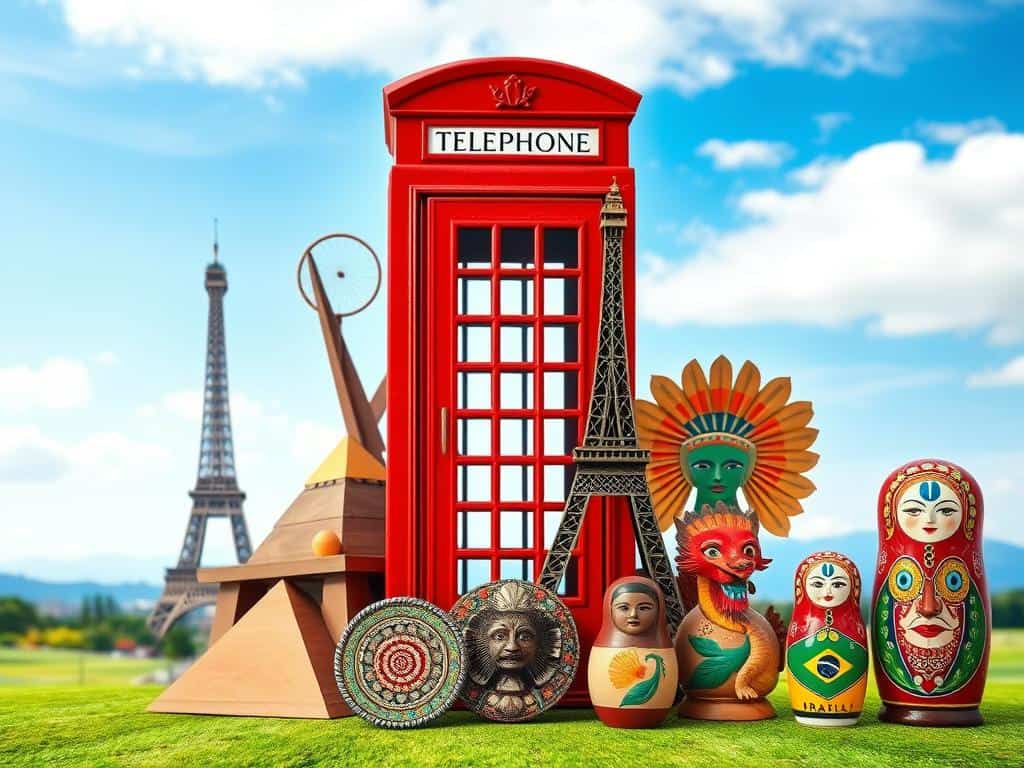
Standing in New York Harbor, I felt a deep emotion as I looked at the Statue of Liberty. This huge monument symbolizes freedom and democracy. It made me realize that culture is more than just traditions or languages. It’s about symbols that show who we are and what we believe in.
Just like the American Flag brings together the 50 states, showing our pride, cultural icons worldwide share similar messages. They represent identity, values, and beliefs. By exploring these symbols, we can discover the rich heritage of cultures and the deep meanings behind famous traditions.
We will look at ten powerful cultural symbols that shape our societies and how we see the world. Each symbol has a story, carrying deep meanings and stirring strong feelings. Let’s start this journey together and see the beauty and depth of humanity through these cultural icons.
Key Takeaways
- Cultural symbols convey powerful messages about identity and values.
- The Statue of Liberty represents freedom and democracy in the U.S.
- National icons like the American Flag and Bald Eagle enhance a sense of unity.
- Cultural heritage is expressed through diverse symbols around the globe.
- Understanding these symbols fosters deeper appreciation of global traditions.
- Many cultural symbols evolve over time, reflecting changes in society.
Understanding Cultural Symbols and Their Significance
Cultural symbols are key to showing who we are as communities. They hold our shared histories and help shape our identity. Symbols connect us to our roots, creating a sense of belonging.
This bond shows how symbols are important. They help us understand our global heritage and connect through time.
The Role of Symbols in Shaping Identity
Symbols represent our values and beliefs. For example, the bald eagle symbolizes strength and freedom in the United States. These symbols remind us of what’s important in our society.
They bring people together, making us appreciate our shared stories. Symbols like historical figures and local wildlife show the diversity of human experience. They highlight the importance of shaping our identity.
How Cultural Symbols Convey Values and Beliefs
Cultural symbols share deep values and beliefs through images and stories. The Sankofa symbol teaches us to learn from the past. Gye Nyame shows the power of God in some cultures.
These symbols give us a glimpse into a community’s moral standards. They guide our actions and choices. Symbols help us understand the principles that shape our societies.
Cultural Icons from Around the World
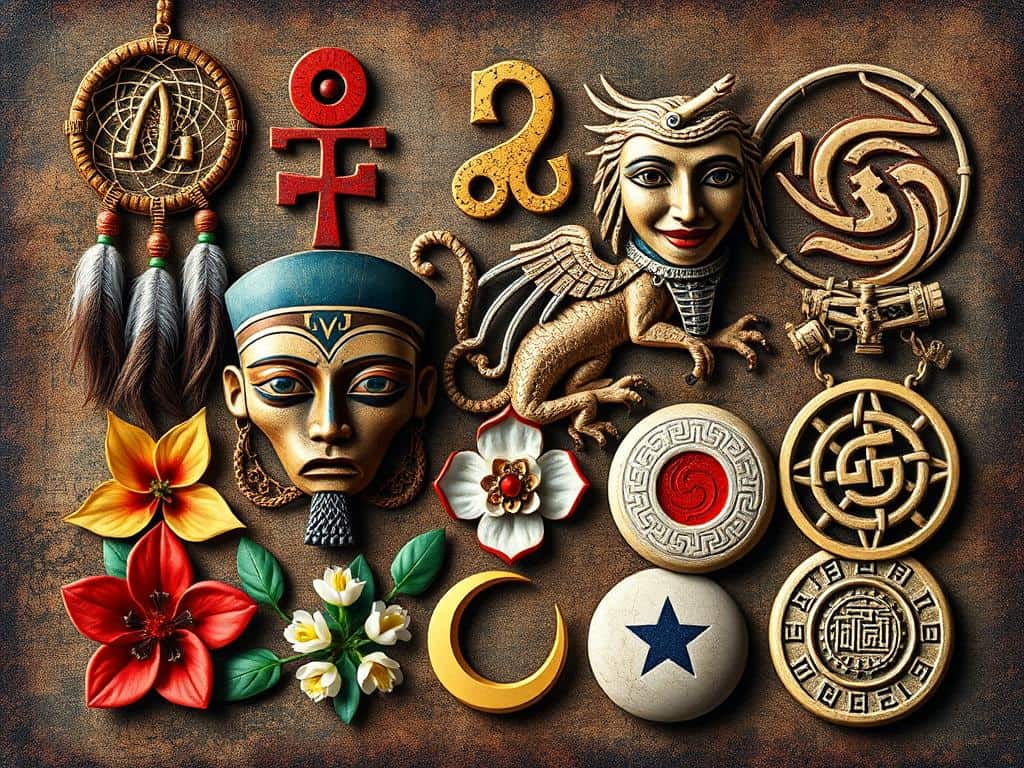
Exploring cultural icons shows us a rich tapestry of values and beliefs. These symbols echo through traditions and philosophies worldwide. Each symbol has its own unique significance, reflecting the essence of different cultures.
Yin and Yang: The Balance of Opposites in Chinese Philosophy
The yin and yang symbol shows the balance between opposing forces in Chinese philosophy. It’s a symbol of light and dark, male and female, living together in harmony. This concept goes beyond beauty; it’s about spiritual principles that guide our lives.
Lotus Flower: Symbol of Purity and Enlightenment in Indian Traditions
The lotus flower is a powerful symbol in Indian traditions. It grows in muddy waters but remains pure and beautiful. It represents overcoming challenges and finding peace and enlightenment.
In Hinduism and Buddhism, the lotus flower is a symbol of self-discovery and divine connection. It’s a cherished symbol in these traditions.
Torii Gate: The Gateway between the Mundane and the Sacred in Japan
In Japan, the Torii gate marks the boundary between the sacred and the ordinary. It shows respect for the divine and is key in Shinto shrines. Passing through a Torii gate means entering a spiritual realm.
This act symbolizes purification and reverence in Japanese spiritual practices.
Merlion: The Blend of Singapore’s Heritage
The Merlion is a symbol of Singapore’s culture. It combines the lion’s head for bravery with the fish body for maritime history. As a national symbol, the Merlion represents Singapore’s identity.
This mythical creature reminds us of the country’s growth and celebrates its diverse heritage.
Garuda: National Pride and Mythology in Indonesia
Garuda is a symbol of national pride in Indonesia. It’s a majestic bird that represents strength, freedom, and protection. As Vishnu’s vehicle, Garuda is featured on Indonesia’s national emblem.
It highlights the connection between cultural identity and spiritual narratives in Indonesian culture.
Conclusion
Looking at the variety of cultural icons, I see their deep cultural significance. They offer insights into our diverse heritage. From pencil drawings to video artworks, people express their identities and beliefs.
This process shows how individuals transform existing ideas into new artistic expressions. It highlights the ongoing evolution of cultural meanings.
The importance of dialogue and creativity in cultural literacy cannot be overstated. When students work together, they learn to empathize and become socially responsible. They use different ways to express themselves, not just copying.
This approach boosts their imagination and prepares them to be global citizens. It’s about engaging critically with the world around them.
Exploring cultural symbols and their role in learning is enlightening. It makes me appreciate the complex stories that make up our societies. Honoring these icons deepens our respect and understanding of human expression and heritage.
By engaging with these symbols, we open up to deeper connections and understanding. We grasp the stories that shape our collective experiences.
