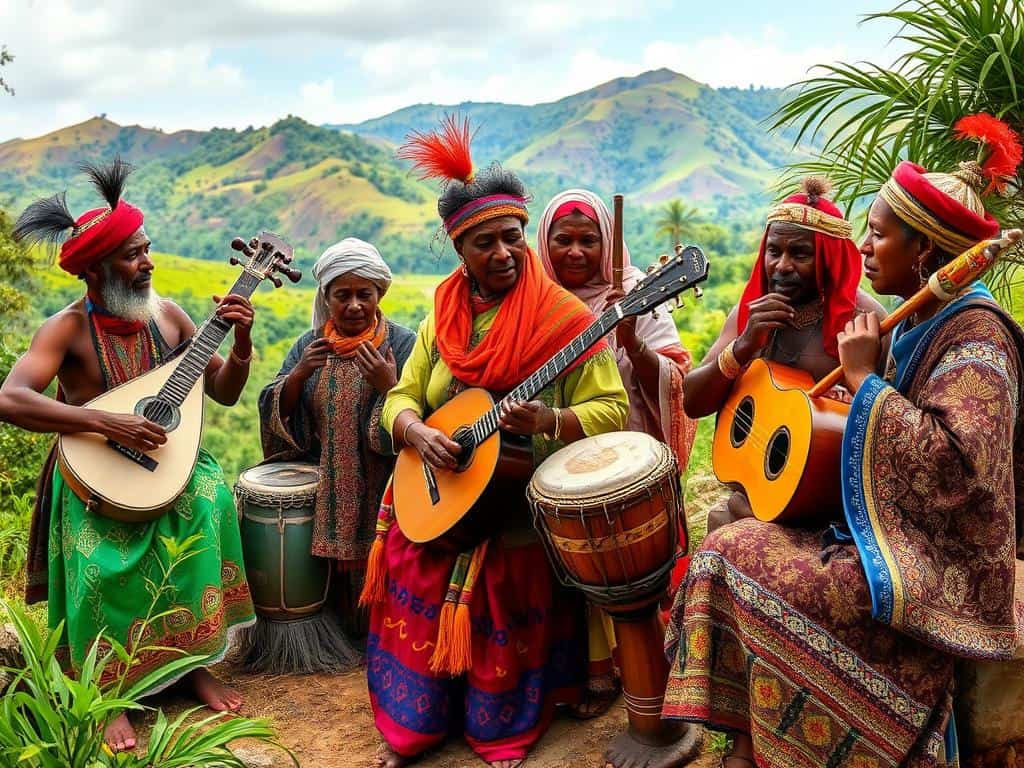
At a community festival, I was surrounded by music from all over. Dancers in bright colors moved to the beat of an Indonesian Gamelan orchestra. Nearby, a Flamenco guitarist played with passion, showing Spain’s deep culture. The air buzzed with energy, showing me traditional music’s true value.
It’s more than just music; it’s a keeper of history and feelings. Each tune shares stories passed down through time. This sparked my interest in exploring traditional music worldwide.
I’ve discovered sounds like *Fado* from Portugal and *bluegrass* from the American South. Each one reflects the people and their stories. I’m excited to learn how these sounds help us understand different cultures.
In this article, I’ll talk about traditional music’s importance. It’s a key part of our world, showing history and feelings that cross borders.
Key Takeaways
- Traditional music is a living piece of cultural heritage, showing what societies are all about.
- UNESCO’s collection shows music from over 70 countries, highlighting our diversity.
- Festivals are great places to see and save traditional music.
- Genres like Gamelan, Flamenco, and Fado tell unique stories of cultures.
- Working together is key to protecting traditional music and its legacy.
Understanding Traditional Music and Cultural Heritage
Traditional music is a powerful way for communities to share their identity and values. It includes styles passed down through generations, showing off a culture’s unique traits. This music helps keep a community’s rich heritage alive, linking the past to the present.
Definition and Importance of Traditional Music
Traditional music, like Hindustani and Carnatic in India, has a long history. These styles are key to keeping India’s cultural heritage alive. In China, the guzheng and pipa show how traditional music keeps cultural practices alive.
This music brings generations together, creating a sense of unity and tradition in communities.
Traditional Music’s Role in Cultural Heritage
Traditional music is more than just art; it’s a keeper of cultural heritage. In Africa, drumming and dancing preserve the continent’s rich stories. UNESCO’s Intangible Cultural Heritage list shows the value of these musical traditions.
These recognitions help protect traditional music, which holds community values, history, and social norms.
In Australia, Indigenous artists mix traditional sounds with modern styles, keeping their heritage alive. Reggae music from Jamaica also reflects Jamaican culture. These examples show how traditional music is both a cultural treasure and a living tradition.
Exploring Diverse Forms of Traditional Music
Music traditions around the world show off different cultures and histories. Each one has its own special features, making the world’s music rich and varied. From Brazil’s lively Samba to Australia’s haunting Didgeridoo, these sounds tell us a lot about the cultures they come from.
Unique Traditional Music Traditions Around the Globe
Exploring unique traditional music lets us see the stories and feelings behind each note. In the United States, bluegrass is a lively tradition with fast beats and complex melodies. It comes from Scottish and Irish roots, sharing tales of life’s ups and downs.
In Ireland, step dancing is known for its quick steps and rhythm. Spain’s flamenco dance shows how music and movement are deeply connected. These traditions entertain and teach, keeping cultures alive through generations.
Festival Celebrations of Traditional Music
Folk music festivals are key in celebrating these musical traditions. Events like the Edinburgh Festival bring together artists from various backgrounds. They promote cultural exchange and understanding among fans.
Attending folk music festivals lets people connect with different art forms. For instance, I remember a festival where Lankum brought Irish folk music to life. Nickel Creek also performed, showing the creativity of American bluegrass. These events help us appreciate the many musical traditions out there, showing how music can bring us together.
Conclusion
Traditional music plays a big role in celebrating and keeping alive different cultures. It shows the true spirit of cultural identity. It also connects people across generations and communities.
When we enjoy traditional music, we help spread its value worldwide. This music brings people together, no matter where they come from.
Traditional music tells stories and shares history through sound. It teaches us about our shared humanity. It shows us the beauty and depth of various cultures.
I suggest we all get more involved with traditional music. We can do this by going to local shows or listening to recordings. These experiences connect us to the heart of communities around the globe.
Enjoying traditional music is more than just fun. It’s a way to appreciate the beauty and cultural importance of these art forms. It honors the work of many artists and traditions.
By embracing traditional music, we celebrate our shared human experience. We show respect for the diverse cultures that make up our world.
