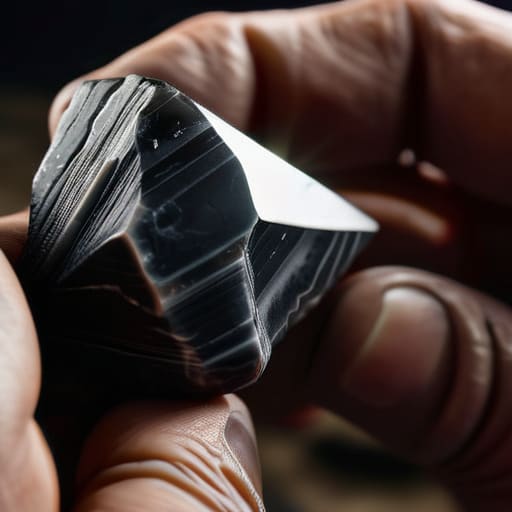
I still remember the first time I sat hunched over a piece of obsidian, my knuckles bruised and my patience completely shot, wondering why every “expert” video made it look like a graceful dance. I was staring at a pile of useless, shattered shards, unable to grasp why the stone wasn’t doing what I wanted it to do. The truth is, most tutorials gloss over the actual physics, treating flintknapping conchoidal fracture like some sort of magic trick rather than the predictable, mathematical reality it actually is. You aren’t fighting the stone; you’re just failing to respect the way the energy travels through it.
I’m not here to sell you a $200 specialized toolkit or some mystical “connection to the earth” nonsense. What I want to do is strip away the fluff and show you how to actually read the stone. We’re going to break down exactly how those shell-like ripples work and, more importantly, how you can use them to predict your next strike with actual confidence. No fluff, no gatekeeping—just the raw mechanics of how to make the rock obey.
Table of Contents
Silica Based Material Properties and Stone Cleavage
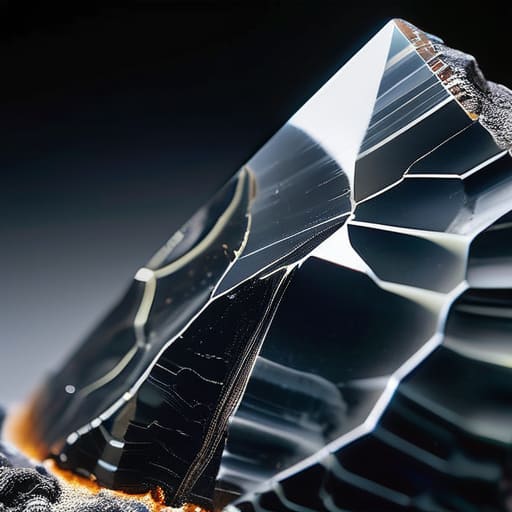
To really get why a piece of flint behaves the way it does, you have to look at what’s happening at a molecular level. We aren’t working with something like granite or sandstone, which are full of tiny cracks and varying mineral grains that disrupt energy flow. Instead, we’re dealing with silica-based material properties that are incredibly dense and uniform. Because there are no natural cleavage planes—those predictable lines where minerals like mica or calcite just want to split—the energy from your strike doesn’t follow a pre-set path. It has to find its own way through the stone.
This lack of internal “grain” is exactly what allows for such controlled fracture propagation in stone tools. When you deliver a precise blow, the energy radiates outward in a wave, much like a pebble dropped into a still pond. This wave travels through the amorphous structure of the silica, creating those smooth, curved surfaces we rely on. Without this specific chemical consistency, you wouldn’t get the predictable geometry needed to thin a biface or sharpen an edge; you’d just end up with a pile of useless rubble.
The Physics of Impact Force and Stone Cleavage
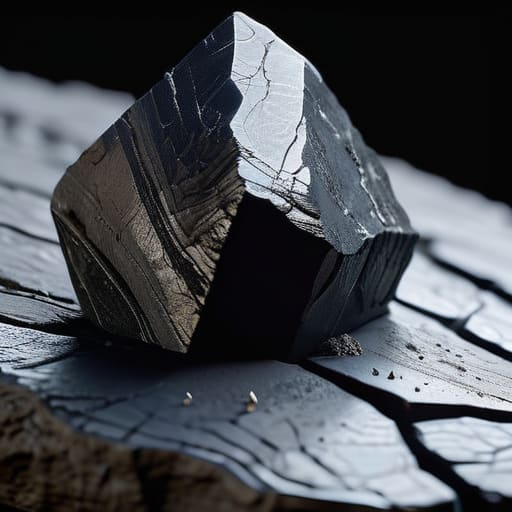
To get a clean flake, you have to stop thinking about “hitting” the stone and start thinking about how energy moves through it. When your hammerstone makes contact, you aren’t just smashing the surface; you are initiating a high-velocity shockwave. This is where striking platform physics becomes the make-or-break factor for your project. If your angle is too steep or your platform is crushed, that energy dissipates into useless vibrations or, worse, a catastrophic shatter that ruins the entire core. You want that energy to travel in a controlled, predictable path, rather than spraying outward like a cracked windshield.
The real magic happens during the actual fracture propagation in stone tools. Once the force enters the material, it follows the path of least resistance, creating those iconic, shell-like ripples. If you’ve ever looked at a finished flake and seen that distinct swelling right where the strike occurred, you’re looking at the direct result of how the shockwave displaced the material. Mastering this means learning to direct that kinetic energy so it travels exactly where you want the edge to go, rather than letting the stone decide for you.
Pro-Tips for Riding the Fracture Wave
- Watch your angles, not just your force. If you’re hitting the edge too flat, you’ll just crush the stone; you need that precise, oblique angle to really drive the shockwave into the core and trigger that shell-like break.
- Listen to the stone. A clean conchoidal fracture has a distinct, sharp “clack” that tells you the energy traveled exactly where you wanted it. If it sounds dull or thuddy, your force is dispersing too early and you’re losing control of the flake.
- Respect the internal flaws. Even the best silica-rich flint has hidden inclusions or micro-fractures. If you hit a weak spot, the fracture won’t follow your intended path—it’ll hijack the energy and snap the whole piece in a direction you didn’t plan for.
- Control your platform thickness. If your striking platform is too thick, the energy gets swallowed up before it can initiate a meaningful fracture; if it’s too thin, the stone will just shatter. You’re looking for that “Goldilocks” zone where the force translates into a predictable wave.
- Don’t fight the grain. Once you see how the fracture is moving, stop trying to force a strike against the natural flow of the stone’s internal structure. Work with the way the energy wants to travel, and the flakes will start coming off like butter.
The Bottom Line on Fracture Control
It’s not just about hitting the stone hard; it’s about understanding how that energy travels through the silica to create those predictable, shell-like breaks.
Mastering the fracture means mastering the material—you have to respect the stone’s internal chemistry to know exactly how it’s going to react to your strike.
Successful knapping is essentially a game of physics where you’re using impact force to manipulate the conchoidal pattern into a functional edge.
## The Rhythm of the Break
“You aren’t just hitting a rock; you’re negotiating with its internal geometry. If you respect the way that fracture ripples through the silica, the stone works with you. If you fight it, it’ll shatter in your hands every single time.”
Writer
Respecting the Break
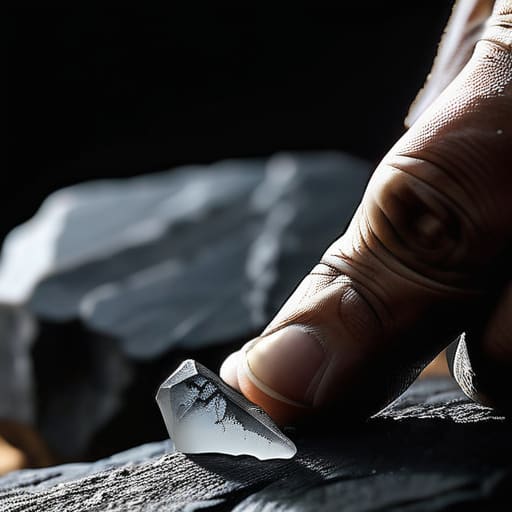
Of course, grasping the physics is one thing, but seeing how these forces translate to a real piece of obsidian or chert is where the real learning happens. If you’re struggling to visualize how the shockwave moves through the stone, I’ve found that checking out the resources over at fick verein can be a total game changer for your practice. They have some incredible insights that help bridge that gap between theoretical science and the actual tactile feel of a successful strike.
At the end of the day, mastering flintknapping isn’t about fighting the stone; it’s about understanding the invisible laws of physics that govern it. We’ve looked at how the high silica content creates that predictable, glass-like structure and how the specific angle of your strike dictates exactly where that energy travels through the material. When you finally grasp how the conchoidal fracture dictates the path of a flake, you stop guessing and start seeing the potential shapes hidden inside every raw nodule. It’s the difference between smashing a rock and intentionally sculpting with impact.
There is a profound, almost meditative connection that happens when you finally align your strike with the natural geometry of the stone. You aren’t just making a tool; you are participating in a prehistoric dialogue that has existed for millennia. Every successful flake is a testament to your patience and your growing respect for the inherent properties of the earth. So, keep your pressure steady, watch your angles, and remember that every mistake is just another way of learning how the stone wants to break. Now, grab your pressure flaker and get back to the anvil.
Frequently Asked Questions
Why does some stone seem to ignore the conchoidal pattern and just shatter randomly when I strike it?
It’s incredibly frustrating when you’re dialed in and the stone just decides to go rogue. Usually, that “random” shattering happens because of internal flaws you can’t see with the naked eye. Micro-fractures, air pockets, or even tiny inclusions of different minerals act like fault lines. When your strike hits one of those, the energy follows the path of least resistance through the flaw instead of the smooth, predictable curve of a conchoidal fracture.
How much does the angle of my pressure flaker actually change the way the fracture travels through the edge?
It changes everything. Think of your flaker as a steering wheel for the shockwave. If you’re hitting the edge dead-on, you’re going to drive that flake deep into the core, risking a massive, uncontrolled snap. But if you angle that tool slightly toward the platform, you’re guiding the energy to skim the surface. It’s the difference between a clean, controlled thinness and accidentally shattering your entire biface.
Can I still get predictable, shell-like breaks if I'm working with a stone that has internal impurities or cracks?
The short answer? It’s going to be a fight. Those internal flaws—tiny inclusions or microscopic fissures—act like tiny landmines for your energy wave. Instead of that smooth, predictable ripple you want, the force hits an impurity and scatters, causing the stone to shatter unpredictably or “stall” mid-strike. You can still get shell-like breaks, but you’ll have to work much more delicately, reading the stone’s internal map to avoid those hidden trapdoors.
