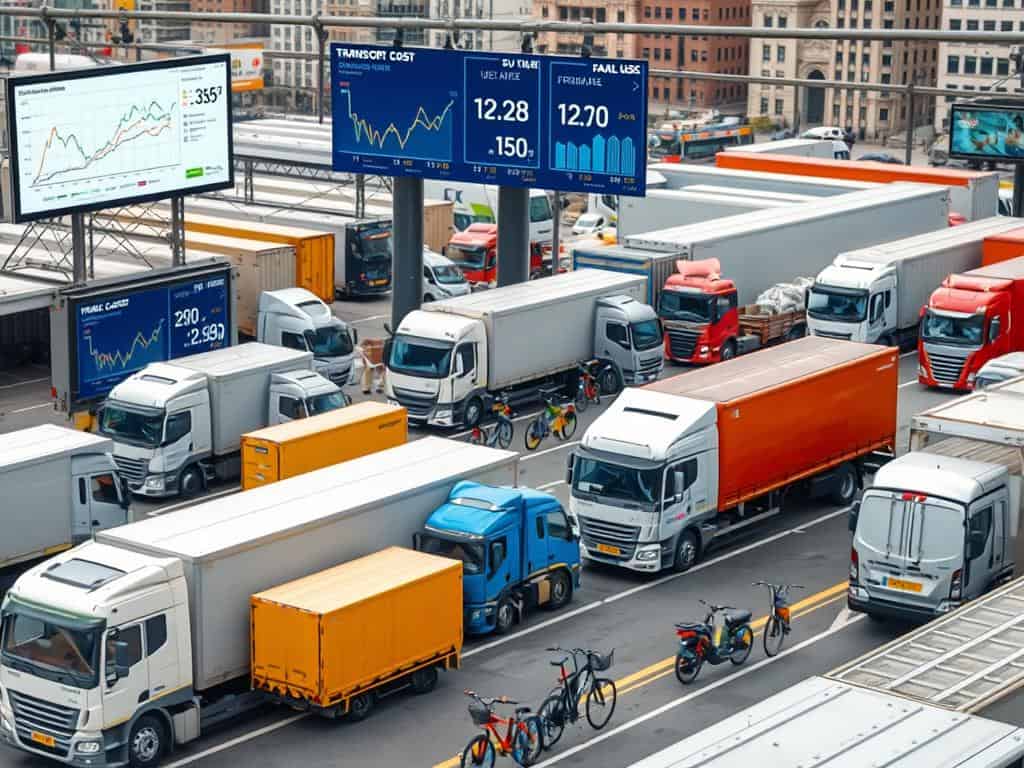
Last year, I faced a big challenge in the logistics field. A crucial shipment of electronics got stuck at customs. This led to delays and high costs. It showed how important managing transport costs is in today’s market.
As the world of shipping changes, it’s key to grasp logistics management. This knowledge keeps a business competitive. Rising costs and other challenges demand smart strategies. In 2024, facing these issues directly will protect profits and aid in growth.
Key Takeaways
- Understanding factors influencing transport costs is crucial for efficient logistics management.
- Last-mile delivery accounts for a significant portion of total shipping costs.
- Utilizing route optimization software can lead to substantial savings in time and fuel.
- Automation can enhance warehouse efficiency and reduce logistical expenses.
- Regularly reviewing contracts helps secure the best rates from carriers.
- Leveraging technology in transportation systems can optimize overall cost management.
- Implementing demand forecasting techniques can refine inventory management and reduce costs.
Understanding the Factors Driving Transport Costs in 2024
The world of transport is changing fast, impacting shipping costs. To keep up and stay competitive, it’s vital for businesses to grasp what’s causing these hikes. This knowledge can help in finding ways to be more efficient.
Recent Trends in Shipping Rates
Recently, shipping rates have been up and down. A record was set in 2023 when trucking costs hit $2.27 for each mile. This was barely a 1% jump from the year before. Factors like fuel costs and the balance of demand and supply have played big roles.
Even as fuel got cheaper, dropping to 55 cents per mile in 2024 from 64 cents the year before, other costs went up. Higher pay for drivers and more pricey equipment are big reasons why shipping isn’t getting cheaper.
Impact of Geopolitical Events on Shipping Costs
World events have a big say in shipping expenses. Attacks on ships and limits on where they can go mess with global shipping big time. Problems around key spots, like the Panama Canal, also lead to pricier and slower deliveries. Companies have to keep these global issues in mind when planning their shipping.
On top of that, world conflicts and changing policies shake up demand. This makes shipping rates even more unpredictable. Staying updated on these global affairs is crucial for handling transport costs well.
Strategies for Effective Transport Cost Management
Effectively managing transport costs needs a clear strategy. A key method is improving supply chain visibility. This lets businesses see shipping rates and how things are moving, in real time. With new technology, companies can respond quickly to demand changes and keep costs low.
Optimizing Supply Chain Visibility
Seeing the supply chain clearly helps companies make smart shipping choices. They can see real-time prices for regular and emergency shipping. This way, they can find the cheapest ways to ship. Being open like this cuts costs and builds strong bonds with partners and customers.
Diversifying Carrier Options
Using just one shipper is risky and could get expensive if problems pop up. It’s smarter to use many shippers. This gives you the power to pick the best service for your needs. You can save money and quickly adjust to new market trends.
Investing in Predictive Analytics and Route Optimization
Choosing the best paths is key to good transport management. Predictive analytics let me predict shifts and find the shortest shipping paths. This lowers fuel use and speeds up deliveries, making everything run smoother. These tools make my shipping strategy flexible and cost-effective.

Conclusion
The world of managing transport costs in 2024 offers both challenges and chances. Shipping prices are going up. So, knowing what makes these costs rise is key. A lot of the cost issues come from not setting prices well. This calls for clever plan changes.
Making the supply chain clearer and using various carriers are vital. I’ve seen that using smart analytics and route planning tools really helps. These steps cut down on costs we don’t need. For example, using better ways to pay and pricing that rewards saving fuel can lower costs linked to driving.
Staying ahead and tweaking plans to deal with cost changes is crucial for companies. It’s important to measure your expenses against the norms. This shows where you can do better. Moving forward, focusing on new ideas and using data well will help businesses do well in changing transport costs.
