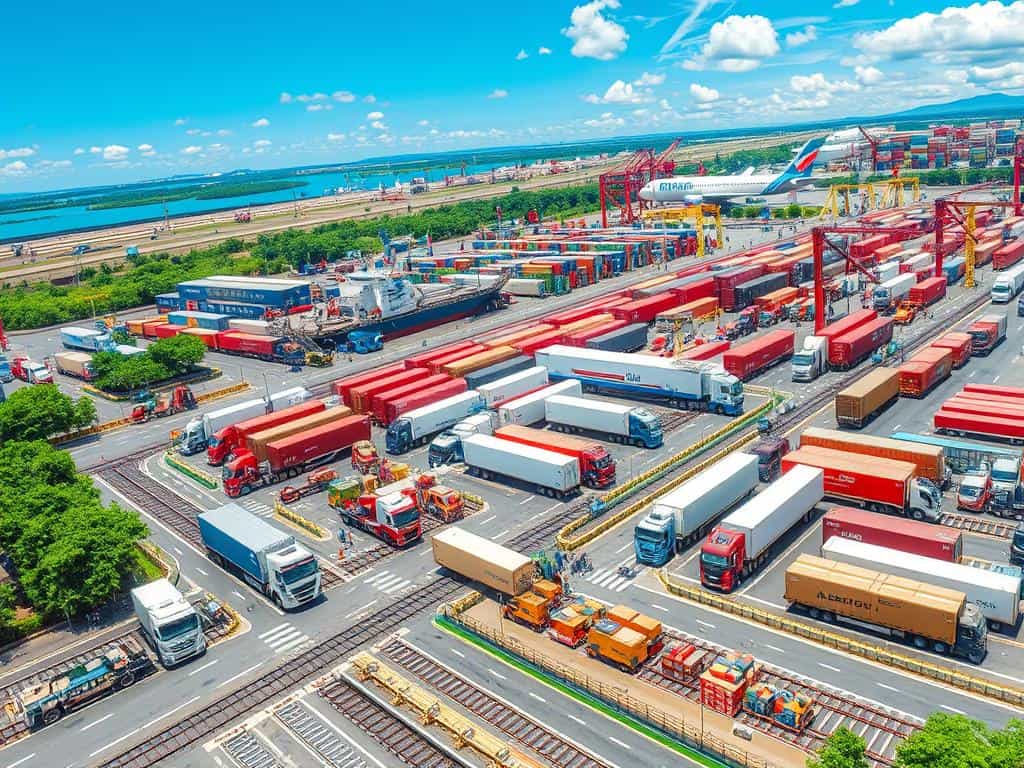
On my way to a logistics conference, I was amazed by how complex delivering goods can be. My flight was just a part of the journey. It involved many types of transport. This showed me the importance of multimodal transport for businesses in global trade.
At the conference, experts discussed choosing the right transport mix to improve operations. Multimodal transport helps solve issues like driver shortages and reducing emissions. By using different modes smoothly, companies can cut costs and become more efficient. This makes multimodal transport essential for today’s businesses.
Key Takeaways
- Multimodal transport utilizes multiple transport modes under a single contract for enhanced efficiency.
- It provides cost-effectiveness by combining sea, rail, and road transport methods strategically.
- Flexibility in logistics allows businesses to adapt swiftly to fluctuating market demands.
- Improved service accessibility is achieved by bridging gaps between homes and transport access points.
- Using eco-friendly options reduces the overall carbon footprint of transportation activities.
Understanding Multimodal Transport and Its Importance
Multimodal transport combines various transport modes under one contract. This system helps businesses boost their efficiency and use each transport method’s strengths. It also makes the supply chain better, lowers costs, and shortens delivery time.
What is Multimodal Transport?
Multimodal transport uses different transportation ways like road, rail, sea, and air to move goods. It makes shipping operations smoother. For example, rail transport is often cheaper than road for long distances. Multimodal systems provide flexibility, reduce paperwork, and enhance overall service.
How Multimodal Transport Differs from Intermodal Transport
Multimodal and intermodal transport both use several transportation methods but operate differently. Multimodal transport has one contract with a single carrier handling everything. Meanwhile, intermodal transport involves several carriers, each managing a journey part. This difference affects the logistics’ efficiency, especially in global trade, leading to faster transit times.
The Role of Integrated Logistics in Multimodal Systems
Integrated logistics is vital for effective multimodal transport. It ensures all transport parts work together, solving issues like documentation and coordination. Many companies now use advanced tracking systems to monitor shipments. Good communication keeps things on schedule and lowers risk from disruptions, like port delays or strikes.
Advantages of Multimodal Transport for Businesses
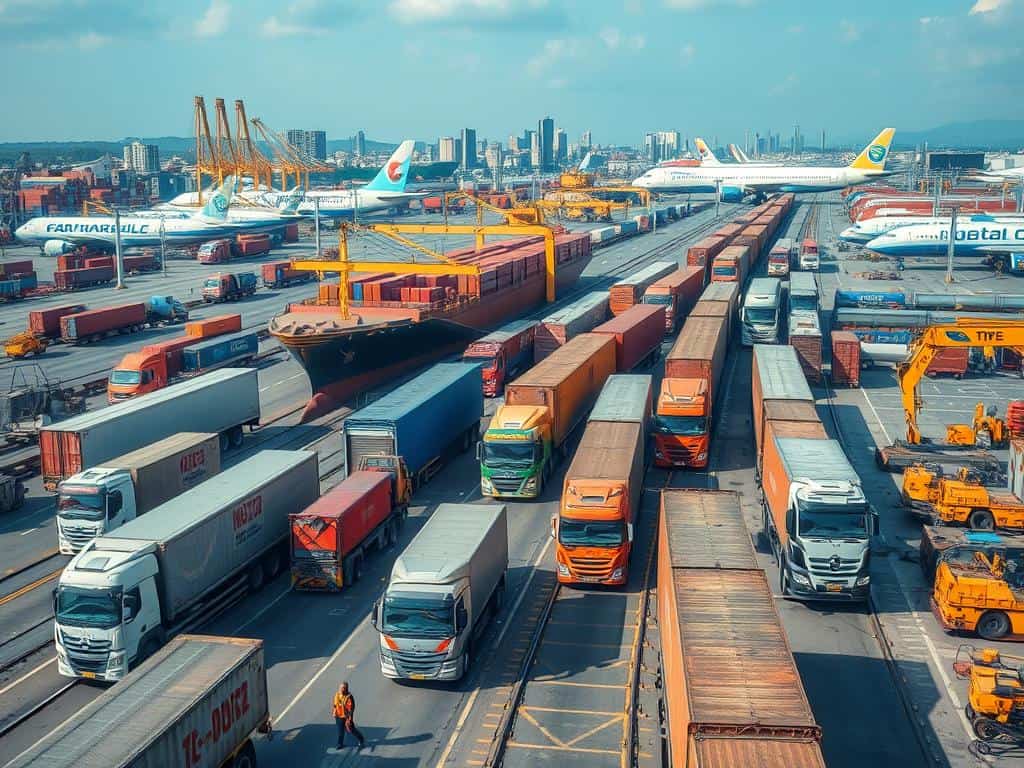
Multimodal transport offers many benefits for businesses looking to improve their shipping and delivery methods. It combines different forms of transport, increasing flexibility and saving money. Here’s a closer look at how multimodal transport can change the way businesses operate.
Cost-Effectiveness and Efficiency
Using the most affordable transportation for each part of a trip cuts costs greatly. For example, using trains or boats for long distances is cheaper than trucks. This approach not only saves money but also speeds up delivery times.
Flexibility in Transport Modes
Multimodal transport is all about flexibility. Businesses can switch between transport methods easily, ensuring on-time delivery. This means they can go from road to rail, or add air freight for urgent orders, without lowering service quality.
Streamlined Supply Chain Management
Multimodal transport makes supply chain management smoother. It simplifies logistics and improves coordination between transport types. This helps businesses lower inventory costs and speed up delivery, which makes customers happier.
Single Point of Accountability
Using one contractor or freight forwarder makes things simpler. It cuts down on complications and offers one point of contact for all transport needs. This makes operations more efficient and solves problems faster.
Reduced Environmental Impact
Choosing greener transport methods, like rail or water, cuts down on fuel use and pollution. This move helps the environment and boosts a company’s image with eco-friendly customers. It’s a win-win for the planet and the business.
Conclusion
Multimodal transport greatly improves how businesses handle logistics and operations. By using different ways to move goods under one agreement, businesses save money. They also handle supply chain challenges better, thanks to this approach.
This method lets companies fine-tune their shipping strategies. It leads to better tracking, lowers costs for coordinating, and speeds up deliveries. Big research firms like McKinsey and KPMG show that supply chains face big risks. Yet, using new tech can make these plans stronger and safer.
As the world becomes more connected, choosing multimodal transport helps businesses stay ahead. It boosts logistics performance, which is key for growth. This shows why it’s crucial for innovative businesses to integrate their logistics. They can then manage risks better and succeed.
