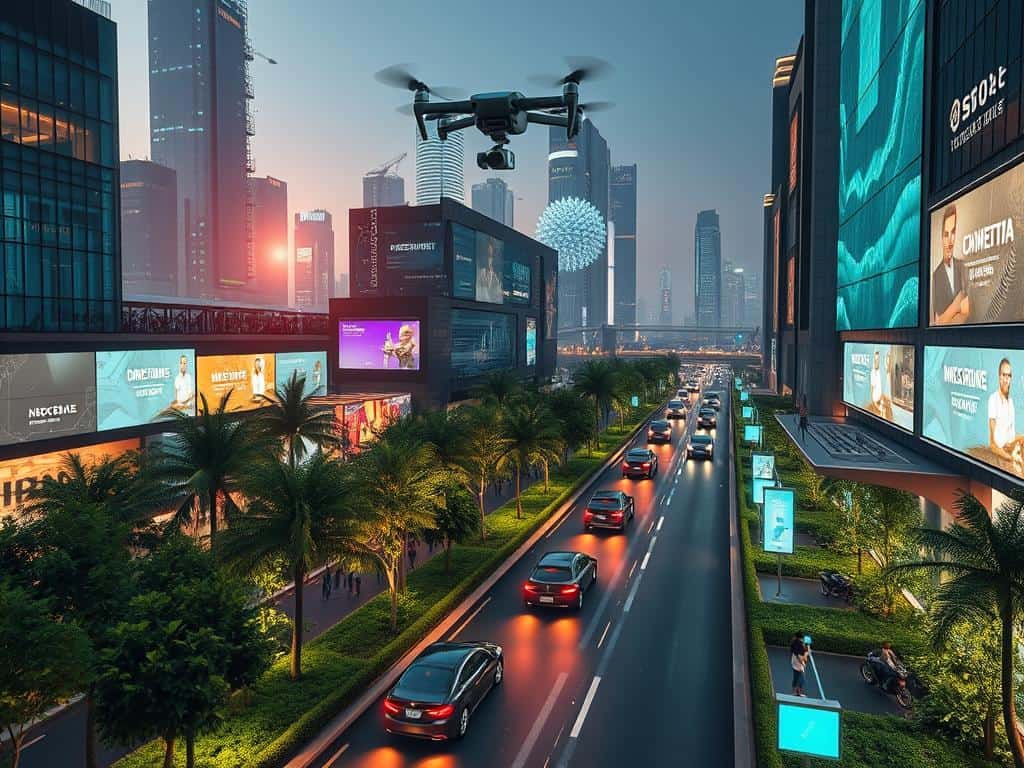
Walking through the lively streets of Jakarta was an eye-opener. Using the city’s public transport was surprisingly easy. A few taps on my phone gave me the best bus routes.
What amazed me most was a smartcard that worked on different buses. This smart solution made public transport easier without new infrastructure. It showed me how Digitalization in Transport is changing things.
Digital tools have sparked incredible innovations in transport worldwide. They make transportation more efficient and help the environment. Think about lower CO2 emissions in Merida, Mexico, or better trips in Rio de Janeiro. Digital transformation in transport is making a big difference. Let’s look more into how digitalization is innovating transportation.
Key Takeaways
- Digital tools are reshaping public transport experiences globally.
- Efficiency in transport is significantly enhanced through smart technology.
- Digitalization directly contributes to environmental sustainability efforts.
- Optimized public transport relies on accurate data publishing, which is currently lacking in many cities.
- Government policies are crucial in driving digital transport innovations.
The Scope of Digitalization in Transport
Digitalization is revolutionizing the transportation sector. The concept of digital transportation signals a major change. It moves from manual methods to efficient digital systems. This reduces the usage of old practices, like paper records and making calls. Now, advanced software is more important for managing logistics. It boosts efficiency across different ways of moving goods or people.
What is Digital Transportation?
Simply put, digital transportation uses tech to better manage logistics. It involves software to handle daily tasks automatically. This allows businesses to quickly meet consumer expectations. For example, real-time tracking helps companies keep an eye on shipments. This results in smarter planning and deliveries that are more on time.
The Impact of Digital Tools on Efficiency
Digital tools have changed how businesses work. These tools greatly cut operational costs. For trucks, this approach has been very effective. Automated systems reduce the money spent on vehicles by better planning and saving fuel. By adopting new tech, companies improve how they operate, saving money and time.
Trends Driving Change
Several trends are pushing digitalization in transport. First, there’s a bigger focus on being green. This changes rules and how the industry acts. Companies now lean towards solutions that are good for the planet, as customers demand it. Then, accessing data instantly has become crucial. This is not just for improving work but also to keep up with fast-changing consumer expectations. The Asia-Pacific region’s smart transport growth, at 17.8%, shows how quickly global markets are shifting.
Digitalization in Transport: Trends and Innovations
The transport sector is changing a lot because of digitalization. Automation and technology in fleets are leading this change. They make operations better and improve how services are delivered. Companies that use these new advancements are staying ahead. They meet demands for safer, faster, and more reliable transportation services.
Automation and Fleet Tech
Automation is changing how the transport industry works. For example, tools like Gbox Assist help keep track of vehicles in real-time. They monitor important things like how much fuel is used and the hours drivers work. Systems like fireTMS make logistics tasks automatic. They also make talking between drivers and fleet managers better. This means more deliveries can be made without extra costs.
Smart Logistics and Data-Driven Insights
Smart logistics and data analysis help improve efficiency. Sharing data across platforms leads to detailed analysis. This analysis helps understand what customers want and how well operations are doing. Tools like ETA Smart calculate arrival times well by considering rest times needed. This lets transport companies be more reliable and use their resources better.
Role of IoT and AI in Modern Transport
IoT and AI are very important in making transport systems modern. IoT lets us monitor things like location in real-time, improving how things are run. AI helps choose the best routes and manage energy use. This leads to less downtime. These technologies not only make fleets perform better but also help the environment by using less fuel. Digital platforms let everyone involved communicate better. This leads to using resources in a smart and cost-effective way.
Conclusion
Digitalization is changing transport in big ways. It’s making transport both efficient and eco-friendly. Digital tools have become vital for improving how things work and helping the planet.
Transport contributes a lot to global emissions, over 24% in 2019. This shows we need to use cleaner tech and ways of doing things.
Digital tools are making a big difference. They help with smart logistics and managing fleets without much hassle. To cut carbon emissions by 55% by 2030, the European Union says we need these digital changes. Luckily, these changes could reduce CO2 emissions by 56% from 2015 to 2050.
Also, tech like IoT and AI is super important for transport companies. These tools let them improve their services and meet what customers want. Looking ahead, making plans that keep the economy and environment in mind is crucial.
The push for digital tech isn’t just about better services. It’s key for reaching our goals for a greener world. This is how we make transport more efficient and kind to the environment.
