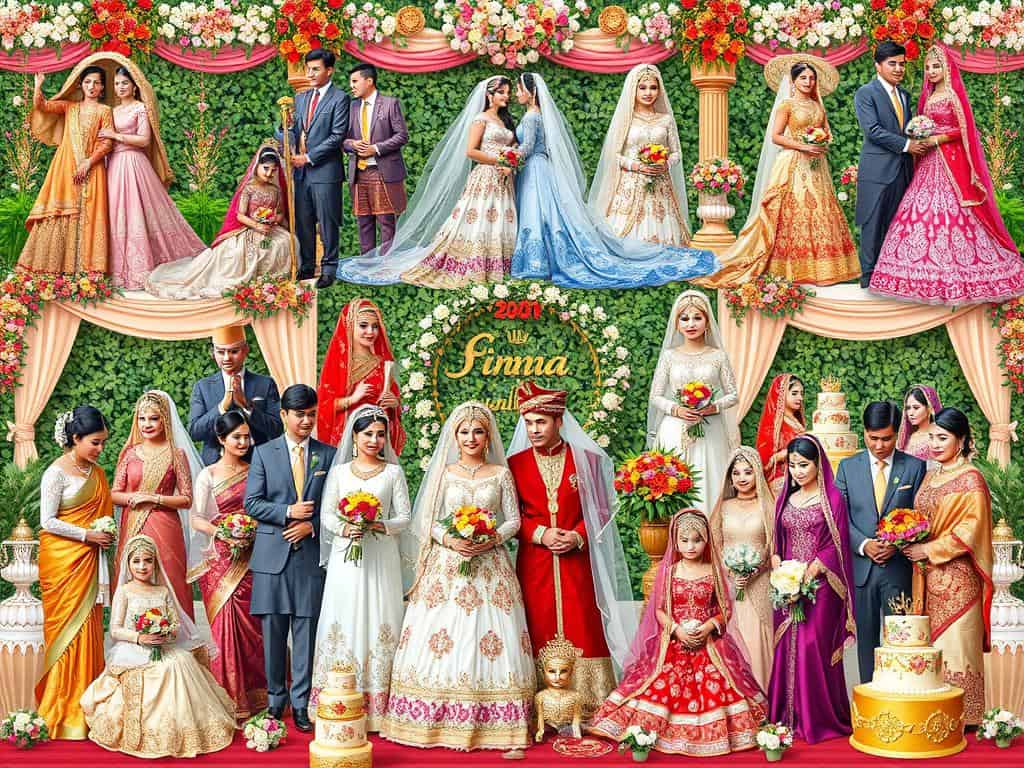
At my cousin’s wedding, I saw a mix of cultures in every detail. The ceremony combined a Chinese tea ceremony with American vows. The smell of teas and the music of a live band brought everyone together.
This experience showed me how wedding traditions connect different cultures. They let couples share their stories while keeping their heritage alive.
In a world full of diversity, marriage customs are very important. They show how different cultures come together. Each culture adds its own traditions, making the wedding a special experience.
Exploring these traditions takes us on a journey around the world. We see how unique practices make weddings unforgettable.
Key Takeaways
- Wedding traditions vary significantly across cultures, reflecting unique historical practices.
- Cross-cultural weddings can present logistical challenges but offer rich, blended experiences.
- Certain ceremonies, like the “lazo” in Mexico and “jumping the broom” in Africa, symbolize unity and commitment.
- Understanding and explaining cultural rituals fosters inclusivity among diverse guests.
- Planning and incorporating elements from both cultures requires careful consideration and organization.
The Significance of Wedding Traditions in Different Cultures
Wedding traditions show the heart of a culture, filled with values and beliefs. They highlight the unique ways each community celebrates marriage. These customs bring families and communities together, helping couples connect with their heritage and make new memories.
Understanding Cultural Celebrations
Weddings around the world are filled with cultural celebrations. In Armenia, the groom’s family gives gift boxes to the bride’s family, showing the bond between families. In the Netherlands, a “wish tree” lets guests write messages instead of signing a book. These traditions make the wedding special, honoring the couple and their backgrounds.
The Role of Heritage in Weddings
Heritage shapes wedding customs in many ways. Couples follow traditions that connect them to their roots. For example, Chinese weddings choose dates based on the stars, while Indian weddings include Mehndi painting to celebrate femininity.
Each custom adds depth to the wedding, showing a strong tie to ancestry and legacy.
Common Themes Across Global Rituals
Many wedding customs share common themes worldwide. Family unity is a big focus, like in Eastern Orthodox weddings with flower crowns. Colors also hold deep meanings, with red being lucky in Asia and white being popular in the West.
These shared elements show a universal desire for love, connection, and community in marriage.
Cross-Cultural Weddings: Blending Traditions
Cross-cultural weddings are becoming more common. Couples from different backgrounds come together to celebrate their love. They blend traditions, honoring both heritages in a special way.
Examples of Successful Integration of Traditions
Couples mix different cultural elements to create a beautiful celebration. For example, some include the Jewish ‘Chuppah’ in a Western ceremony. Others add a Chinese tea ceremony to a Hindu wedding.
This blending respects each partner’s identity. It makes the wedding memorable for everyone involved.
The Impact of Multicultural Partnerships on Wedding Customs
Multicultural partnerships change wedding customs. They inspire couples to make their own unique rituals. Planning starts with talking about cultural elements and working together.
Couples add their backgrounds to the wedding, from food to ceremony details. Suppliers with experience help make sure every tradition is respected. This way, weddings become more diverse and rich in culture.
Unique Wedding Traditions from Various Countries
Wedding traditions around the world show how love and family are celebrated differently. Each tradition has its own history and meaning. They add beauty to weddings, making them unforgettable for everyone involved.
India: The Colorful Hindu Wedding Ceremonies
Hindu weddings in India are full of color and joy. The Varmala ritual is a special moment. It’s when the bride and groom exchange garlands, showing their commitment to each other.
This tradition, along with the long celebrations, brings families closer. It makes the wedding even more special.
Greece: Symbolism in Greek Orthodox Weddings
Greek Orthodox weddings have deep meanings. The Stefana crowning is a key part. The priest puts crowns on the couple’s heads, showing their unity and community support.
This tradition adds a special touch to the wedding. It creates a sense of unity among everyone there.
China: Tea Ceremonies and Symbolic Colors
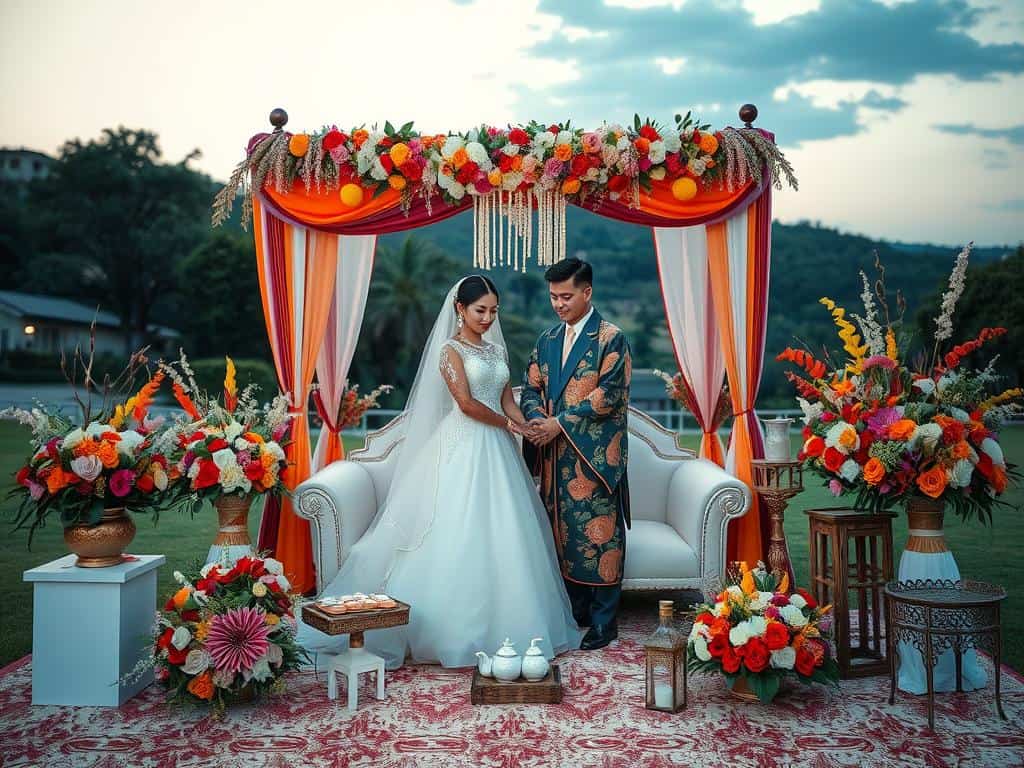
In Chinese weddings, the tea ceremony is very important. It shows respect and family ties. The couple serves tea to their elders, surrounded by the color red, which means happiness and prosperity.
This tradition honors the couple’s heritage. It shows their gratitude and commitment to their families.
Around the Globe: Highlighting Other Fascinating Customs
Many countries have unique wedding customs. In Africa, the knocking on the door ceremony is a big moment. It shows the groom’s request for the bride’s hand.
In Italy, breaking a wine glass is believed to bring good luck. In Mexico, the Lasso ceremony symbolizes a strong bond. These traditions highlight the importance of family and culture in weddings.
Conclusion
Exploring wedding traditions around the world shows us a colorful mix of cultures. These traditions give us a peek into the many customs and rituals. They also show how Cross-Cultural Weddings bring different heritages together.
Studies on Southern Americans and Keralite Indians reveal interesting trends. Couples today want to make their weddings personal, balancing their own wishes with family expectations. They’re choosing shorter ceremonies and mixing their cultural traditions, showing their creativity and adaptability.
Wedding traditions are more than just ceremonies. They deeply express our identities and values. By blending old and new, we create unforgettable celebrations. These moments honor our love and connection, connecting us to our past and each other.
