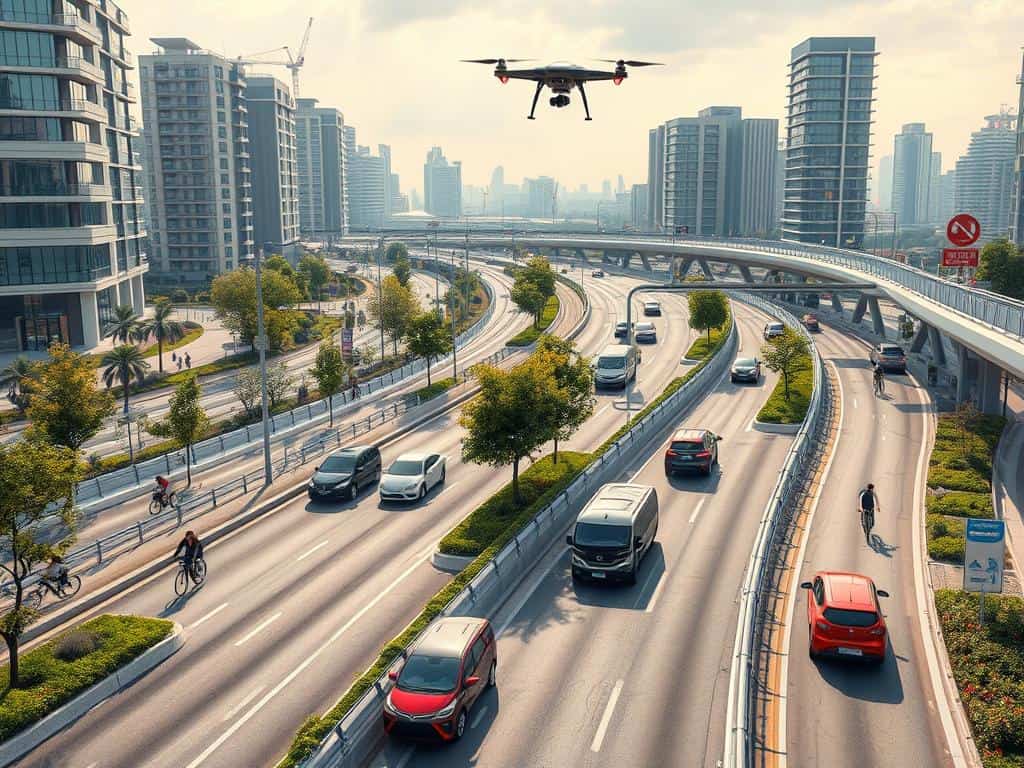
Last summer, walking downtown Los Angeles opened my eyes to changes. The silent move of electric cars and lively e-scooters showed a new era. We’re witnessing a pivotal transformation. This isn’t just a vision anymore; it’s becoming our new norm as we step into 2024. Urban transport is evolving, thanks to new ideas in mobility. These changes promise better access and care for the environment. Advanced technology and city designs are creating effective public transport. They focus on the well-being of our planet and communities.
More people are using electric vehicles (EVs) as charging spots increase. This shift is revolutionizing how we move around cities. Shared transport options make it simpler to get places and lessen traffic jams. At the same time, bikes and e-scooters are changing short distance travel. Looking ahead, self-driving cars show promise to make traveling safer and more efficient. It’s clear we’re heading to a more connected and green city life.
Key Takeaways
- The adoption of electric vehicles is surging due to enhanced infrastructure and accessibility.
- Shared mobility is reducing traffic congestion and carbon emissions in cities.
- Autonomous vehicles have the potential to transform urban mobility, though still in testing.
- Micro-mobility options like e-scooters and bicycles are growing in popularity for short trips.
- Smart infrastructure and IoT are being integrated to improve urban transport systems.
The Rise of Electric Vehicles and Their Impact on Urban Mobility
Electric vehicles are changing how we get around cities. This change is driven by our growing concern for the environment and the need for clean transport. As cities adapt, electric vehicles become key in designing the future of transport.
Government Incentives for Electric Vehicle Adoption
Governments are making it easier to choose electric vehicles. They offer subsidies, tax breaks, and even special EV lanes. These benefits make electric vehicles more affordable and boost markets focused on clean transport. As more people turn to electric vehicles, new jobs appear in production, charging station installation, and maintenance.
Charging Infrastructure Enhancements in Cities
Improving charging stations is crucial for electric vehicles to grow. More charging points mean people worry less about running out of power. Advanced charging helps use energy smarter and supports green power. With more stations, using electric vehicles becomes easier, leading to greater acceptance.
Sustainability Benefits of Electric Vehicles
Electric vehicles bring many environmental benefits. They cut down on harmful gases and make cities quieter. Electric buses even help clean the air we breathe. Thanks to better battery technology, electric vehicles are becoming more efficient. Bringing electric vehicles into our transport systems turns cities into leaders in clean technology. This boosts the economy too.
Urban Transport Solutions: Integrating Micro-Mobility Options
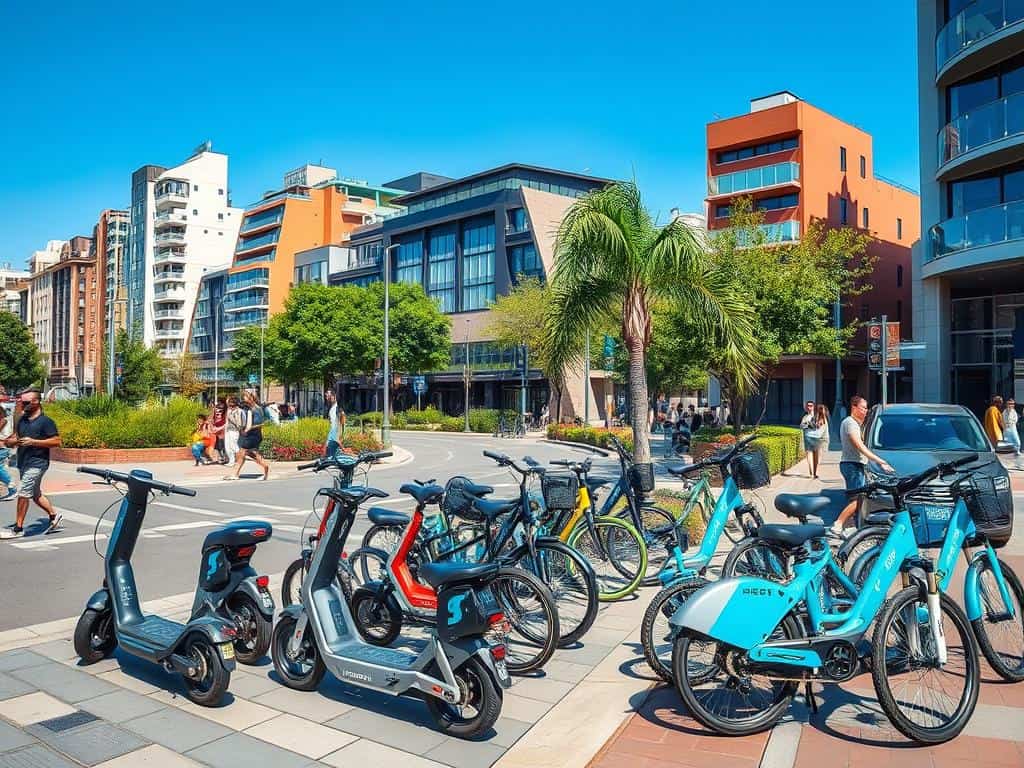
Urban transportation faces big challenges that need fresh solutions. Micromobility is changing how we travel short distances. E-scooters and bikes provide flexible and convenient travels. They’re predicted to hit a market value of $300 billion by 2030. This shows how important they’re becoming in cities. In 2023, people in the U.S. and Canada took 157 million trips using shared micromobility options. This emphasizes their role as a popular way to commute.
Micromobility Options Redefining Short-Distance Travel
Micromobility is key for getting around the city, especially for trips up to three miles. A study by INRIX says these methods could make up to 50% of such trips in the States. A scooter trip costs between $2.80 and $4.70 for 12 minutes. This is cheaper than traditional transport. Plus, electric vehicles don’t emit pollutants, helping cities stay clean and speeding up travel.
Public Access and Affordability in Urban Areas
Micromobility is accessible and affordable, catering to various people. Cities like Milan and Seattle work hard to improve access to these transports. They offer easy-to-use features for navigating and costing rides. This push not only gets more people to try micromobility. It also helps local shops and tourist spots by increasing visits.
Cities Rethinking Infrastructure for Micromobility
Cities need to change their infrastructure to fit micromobility better. Adding special lanes and spots for e-vehicles makes trips safer and easier. Big cities are seeing the benefits of moving away from car-dominated designs. This shift can spark talks on how we use land and make housing more affordable. By focusing on micromobility, cities can enhance living standards while cutting emissions and reducing traffic jams.
Autonomous Vehicles and the Future of Public Transit
Autonomous vehicles (AVs) are changing our view of city travel and accessibility. Recent advances in AV technology focus on safety, efficiency, and making rides better for everyone. Knowing how this technology works today helps us see how it will shape future travel.
Current Developments in Autonomous Vehicle Technology
AVs are being tested in cities worldwide. Companies like Waymo now offer 24/7 autonomous taxi services. EasyMile has rolled out its vehicles in more than 400 places, aiming to boost public transport with AVs. These cars use high-tech sensors and cameras to move safely and smartly through the streets.
Implications for Public Transport Systems
Adding AVs to public transit has big benefits. For example, Arlington, Texas, got over 15,000 rides from its AV service in a year. This shows how AVs can make trips better and connect more parts of the city. Plus, AVs can cut down traffic jams and pollution, leading to cleaner, greener cities.
AVs could also make it cheaper and easier for everyone to get around. This could make fair access to transport a reality for all.
Conclusion
The future of city transportation looks bright, thanks to new and creative solutions. These innovations aim to solve problems like traffic jams and air pollution. With the use of electric cars, self-driving technology, and short-distance travel options, cities are becoming greener. This change needs teamwork from governments, tech companies, and local communities. We must make sure the transportation options we create work well and everyone can use them.
Using different types of transport together in cities is very important. It helps people move around smoothly and sustainably. When buses, trams, and bikes are linked well, getting around town becomes easier. To get more people to travel in eco-friendly ways, we need to focus on making things like waiting times shorter and walking safer. This can make transfer spots better and encourage people to choose greener travel methods.
We’re at the start of a big change in how cities handle transport. If we focus on building sustainable places and better public transportation, commuting will get better, pollution will decrease, and cities will be nicer places to live. As we move forward, adopting these new transport technologies will lead to smarter and more efficient ways of getting around for everyone.
